



There’s a particular kind of game that doesn’t ask you to compete, escape, or perform. It just asks you to make something — one small decision at a time — and then lets you look at what you’ve made. For a lot of people, that’s exactly what they need at the end of a long day.

A European-style villa in the game, built room by room through match-3 puzzles.
The Two-Part Loop That Works
Some of the most satisfying mobile games don’t try to do one thing perfectly. They do two things well enough that the combination becomes more than the sum of its parts.
The first part is familiar: a match-3 puzzle. Match colors, clear the board, reach the goal. It’s the same mechanic that made Candy Crush a household name — simple to learn, genuinely tricky to master, and rewarding in that immediate, visual way that puzzle games do best.
The second part is where it gets interesting. The coins you earn from those puzzles don’t just sit in a wallet. They buy furniture. Wallpapers. Flooring. Decorative objects. Slowly, room by room, you’re building a space that looks like yours.
That’s the loop: puzzle, earn, decorate, repeat.
It’s not revolutionary on paper. But in practice, it solves a problem that pure puzzle games have never quite cracked: what happens when the novelty of the puzzle itself wears off?
Why the Decoration Layer Matters

A Japanese-inspired room with minimalist furniture and natural light.
Puzzle games, by nature, are repetitive. The 50th level isn’t fundamentally different from the 5th — the obstacles get harder, the boards get more complex, but the core action is the same. For some players, that’s enough. The mastery itself is the reward.
But for others — probably most others — there needs to be something else. Something that makes level 50 feel different from level 5 because the world around the puzzle has changed.
That’s what the decoration layer provides. When you finish a level and use your earnings to replace a bare floor with hardwood, or swap a plain wall for patterned wallpaper, the game acknowledges your effort in a way that a score never could. The room looks different. It looks better. And it looks that way because of what you did.
It’s a small thing, but small things add up. Over time, those rooms become a record of your progress — not just how far you’ve gotten, but how you’ve chosen to express yourself along the way.
Three Design Philosophies, One Game

A Korean-style warm interior with soft lighting and comfortable textures.
One of the more thoughtful touches in My Little Home is the way it handles style. Rather than offering a generic catalog of furniture, the game organizes its design options around three distinct aesthetic traditions:
European — ornate, layered, rich in detail. Heavy curtains, carved wood, classical proportions. The rooms feel like they’ve been lived in for generations.
Japanese — minimal, restrained, focused on negative space. Low furniture, natural materials, light that enters softly. The rooms feel like a breath held.
Korean — warm, comfortable, personal. Soft textures, rounded shapes, colors that lean toward cream and blush. The rooms feel like a conversation with a close friend.
The choice isn’t just cosmetic. It shapes how you approach the game. A player who chooses European will likely fill rooms more densely, layering objects until the space feels complete. A player who chooses Japanese might leave walls bare, finding satisfaction in restraint. Neither is wrong — the game doesn’t score you on design quality — but the style you choose becomes a kind of self-expression.
The Fantasy of Starting Fresh

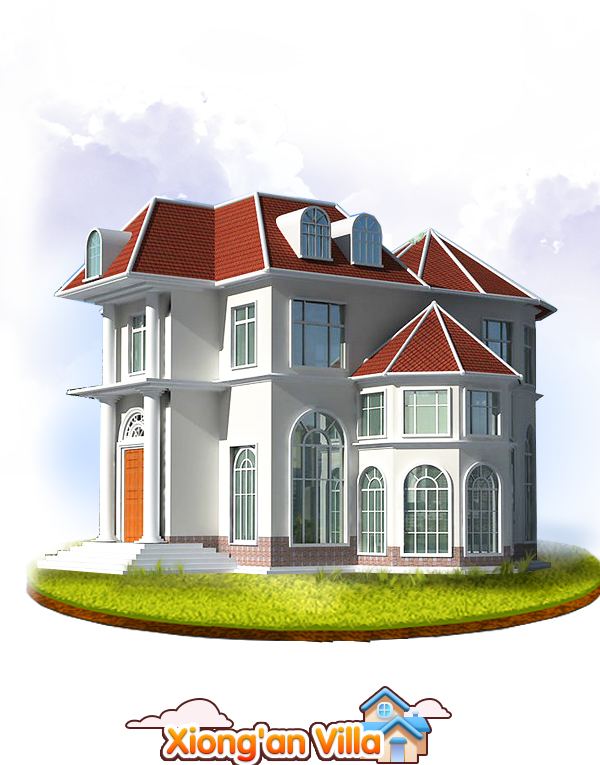
A villa exterior with garden elements, showing the scale of spaces players can design.
There’s a reason home design shows have been popular for decades. The fantasy of transforming a space — of taking something ordinary and making it personal — is deeply appealing. But in real life, that fantasy is expensive, time-consuming, and full of compromises.
Games like My Little Home offer a version of that fantasy without the friction. You don’t need a budget. You don’t need permission from a landlord. You don’t need to live with a decision for years. If you don’t like how a room turned out, you change it. The cost is a few more puzzles, and the puzzles are fun anyway.
For players who are renting, living with family, or simply don’t have the time or money to decorate a real home, the game offers something valuable: the feeling of ownership over a space. Even a virtual one.
What the Social Layer Actually Adds
Most mobile games include some form of social feature — leaderboards, teams, shared events. Often these feel tacked on, an attempt to manufacture engagement through competition.
But in a design-focused game, social features serve a different purpose. They’re not about winning. They’re about sharing.
Players exchange tips on how to style difficult rooms. They share screenshots of spaces they’re proud of. They participate in design competitions not to prove they’re the best, but to see how other people solved the same problem. The social layer becomes a source of inspiration rather than pressure.
This matters because it changes the emotional tone of the game. It’s not a race. It’s a community of people who like making things look nice, sharing what they’ve made with others who appreciate the effort.
Who This Is Actually For
A detailed bedroom scene showing the level of customization available.
The obvious audience for a game like this is people who enjoy interior design. But the actual audience is broader:
- People who need a low-stakes creative outlet — the puzzles are engaging but not stressful, and the design choices are satisfying without being overwhelming
- People who find pure puzzle games hollow — the decoration gives context and meaning to the match-3 mechanics
- People who want something to look forward to — the gradual unlocking of rooms and styles creates a sense of ongoing progress
- People who find competitive games exhausting — there’s no ranking, no pressure, no sense that you’re falling behind
The common thread is that these players aren’t looking for a challenge to overcome. They’re looking for a space to inhabit — one that responds to their choices and rewards their time with visible, personal progress.
The Quiet Satisfaction of Completion
There’s a moment in games like this that doesn’t get talked about enough: the moment when a room is finished.
Not “finished” in the sense that you’ve placed every available object. Finished in the sense that you’ve placed enough, and arranged them enough, that the room feels right. It feels like yours.
That moment is quiet. There’s no fanfare, no achievement notification, no dramatic music. You just look at the screen and think: this is what I wanted.
And then you move to the next room, because there’s always another space to make your own. But the feeling lingers — the sense that you’ve created something, however small, that didn’t exist before you decided to make it.
Final Thoughts
Games that combine puzzles with creativity aren’t new. But the ones that work — the ones that people keep playing for months rather than days — understand something important: the puzzle is the means, not the end. The end is the thing you build. The room. The home. The small corner of a virtual world that looks the way you want it to look.
My Little Home isn’t trying to be the hardest puzzle game or the deepest design simulator. It’s trying to be the game you open when you want to feel like you’ve accomplished something gentle. And for a lot of people, that’s exactly the right thing at exactly the right time.
Images courtesy of Chrisantem / Fingertip Playland.
Related Reading
- Why Low-Stakes Creative Games Are Having a Moment
- The Psychology of “Before and After” in Game Design
- How Mobile Games Became the New Comfort Food