



A free restaurant management game where you develop cuisines, serve guests, earn money, decorate your space, and slowly expand from one small shop to a chain. No install needed.

Chinese Restaurant blends food-themed progression with light management mechanics you can play in short sessions.
I have played management games that demand hours of attention before anything interesting happens. Sometimes I just want something slower — a game where I can develop a few dishes, serve some customers, and watch a small restaurant grow. Chinese Restaurant on chrisantem.com is built around that exact pace.
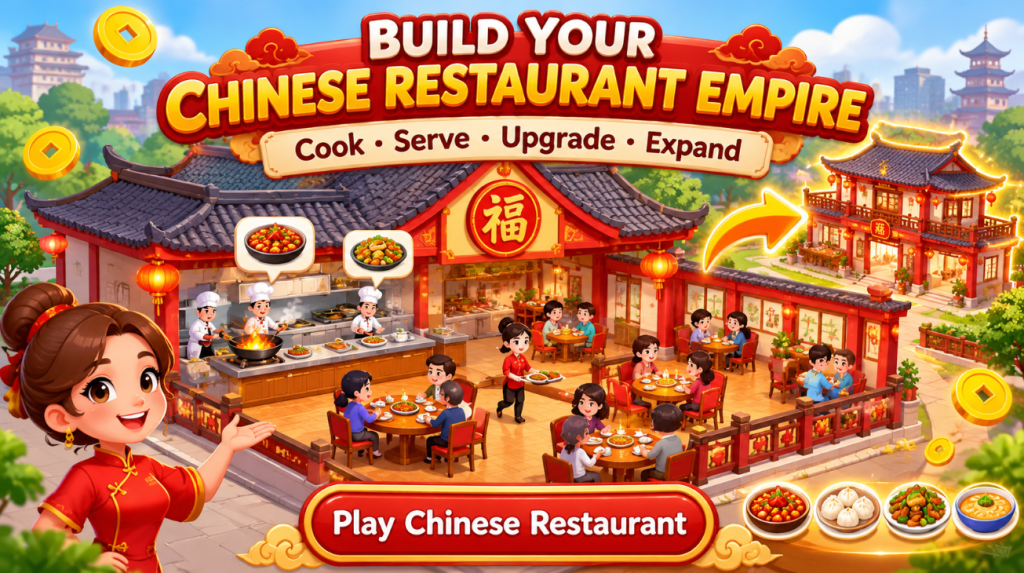
It is a browser-based restaurant tycoon. You start with a single location, pick dishes from different Chinese cuisines, serve customers, reinvest the money into decorations and upgrades, and eventually expand into new shops. The whole thing loads in a browser tab and does not ask for an install or account.
Here is how it actually plays.
The Core Loop: Cook, Serve, Expand
The game gives you a simple chain to follow. Develop dishes, seat customers, collect earnings, then use that money to improve the restaurant. Repeat until you can open a new location.
That structure works because each step feeds the next. Better dishes attract more customers. More customers mean more income. More income lets you decorate, which improves the atmosphere and keeps the cycle moving.

The early level icons introduce the kitchen tools you will use as you build out your menu.
There is no frantic multitasking. The pacing is relaxed, which makes it easy to check in for a few minutes and still feel like you moved forward.
Regional Cuisines as Unlockable Content
One of the better ideas here is treating Chinese regional cuisines as progression unlocks. You are not stuck with one generic menu. Instead, you work through different styles — Sichuan, Cantonese, Shandong, Jiangsu — and each brings its own dishes and visual identity.

Sichuan cuisine is represented by a bold red-and-gold character that matches the region’s spicy, colorful reputation.

Cantonese cuisine uses a golden prosperity-style character, fitting the region’s dim sum and refined cooking traditions.

Shandong cuisine gets an earthy icon that nods to the region’s agricultural roots and savory seafood dishes.

Jiangsu cuisine is represented with a delicate, decorative birdcage icon, matching the region’s elegant presentation style.
The variety gives you a reason to keep pushing forward. Unlocking a new cuisine feels like opening a new section of the menu, and each one comes with its own recipes to upgrade.
Decorations Change the Feel of the Place
Once you start earning, you can decorate. The decoration system in Chinese Restaurant is more than a stat boost — it actually changes how the restaurant looks. You can swap tables, chairs, plants, and accent pieces to match different themes.

A simple wooden table setup with a small plant and a food tray — a clean starting look for a new restaurant.

A tea-themed table set with bamboo mats and a blue porcelain tea set, giving the room a more traditional feel.

A richer red-and-gold table design with a decorative fan and matching chairs for a more upscale atmosphere.
Some pieces are functional. Others are purely visual. Together they let you shape the restaurant into something that feels like yours, which is half the fun in a tycoon game.
Levels, Lotteries, and Recipe Upgrades
The game stretches across 24 levels, split into clearly marked ranges. The difficulty curve stays gentle, so you are rarely stuck, but the higher levels do ask you to think more about which recipes and chefs you prioritize.

Mid-game level icons shift to green, signaling new recipes and slightly more complex kitchen management.

Later level icons turn purple, hinting at higher-tier content and more demanding customer expectations.
There is also a lottery system for ingredients and recipes, plus recipe upgrades that improve dish quality and profit. These systems add small layers of decision-making without turning the game into a spreadsheet. You are still mostly cooking and serving, but now you have a few extra dials to turn.
How It Compares
| Game | Core Loop | Session Length | Theme |
| Chinese Restaurant | Develop dishes → serve customers → decorate → expand | 5–10 minutes | Restaurant tycoon |
| Goodgame Café | Manage staff and recipes in a café | 10–15 minutes | Café management |
| Diner Dash | Fast-paced serving and seating | 3–5 minutes | Time management |
| Cafeteria Nipponica | Build a restaurant chain with reviews | 10–20 minutes | Pixel-art tycoon |
Chinese Restaurant sits somewhere between a relaxed tycoon and a light cooking game. It does not rush you, but it also gives you enough goals — new cuisines, new decorations, new shops — that there is always something to work toward.
The Moments That Land
- Unlocking a new cuisine: Each regional cuisine comes with its own visual identity, so opening one feels like a small event.
- Decorating the dining room: Watching the same space change from a basic setup to a themed restaurant is satisfying.
- First successful recipe upgrade: The stat bump is small, but the sense that your menu is improving keeps you engaged.
- Opening a new branch: Expanding into a second location gives the game a sense of forward momentum.
Who This Is For
- Casual tycoon players: The pacing is relaxed and the mechanics are easy to learn.
- Fans of food-themed games: The regional cuisine focus adds more flavor than a generic cooking game.
- Short-session players: A few minutes is enough to make meaningful progress.
- Browser game fans: No downloads, no accounts, no barrier to entry.
Where to Play
Chinese Restaurant is available at chrisantem.com/chinese-restaurant/. It runs in any modern browser on desktop and mobile.
The game is free. Progression is paced so casual play still moves you forward without feeling like a grind.
If you want a restaurant management game that respects your time but still gives you something to build toward, this one is worth keeping open in a second tab.
Final Thoughts
Browser management games are easy to overlook, but Chinese Restaurant makes a quiet case for the genre. The progression is clear, the decoration system gives you room to express yourself, and the regional cuisine theme keeps the menu interesting.
It will not replace a full tycoon sim. It is not trying to. But for those moments when you want to develop a few recipes, serve some customers, and slowly build a small culinary empire, it is a comfortable way to spend ten minutes.
Have you tried Chinese Restaurant? Drop a comment with your favorite cuisine to unlock. I am still working my way through the Jiangsu recipes.
Related: If you enjoy browser-based casual games, check out the full collection at chrisantem.com.